How Jiguang Analysis Solves Problems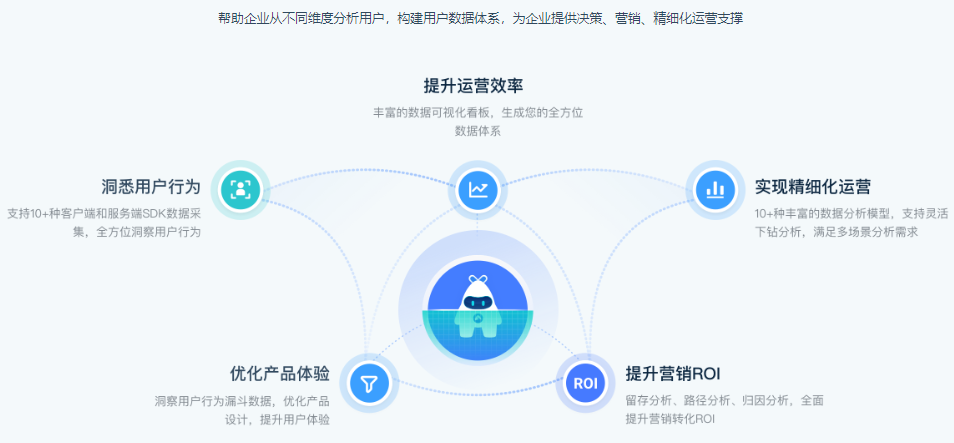
Solving the "Data Collection" Problem
Supports multiple tracking and data collection methods. Through APIs, SDKs, and the WeChat Open Platform, user data scattered across different operation channels is aggregated, cleaned, stored, and used to build a unified data foundation.
- Full-domain user data collection connects unified user identity recognition across all domains.
- Supports three tracking methods: code tracking, automatic tracking, and visual tracking.
Solving the "Identity" Problem
Through a multi-level dynamic user identification solution, it achieves trusted unification of user relationships in complex scenarios such as cross-device, cross-platform, and multi-device account login, and accumulates CDP user data assets. User data asset management supports flexible user segmentation by various conditions and files, and supports viewing individual user profiles and behavior flows.
Solving the "Data Viewing" Problem
Data reports are visually displayed. Data from analysis models can be quickly presented as various reports through the interface, and you can drag and drop to form the reports you want to view. You can also obtain data through email subscriptions or monitoring alerts.
Solving the "Data Usage" Problem
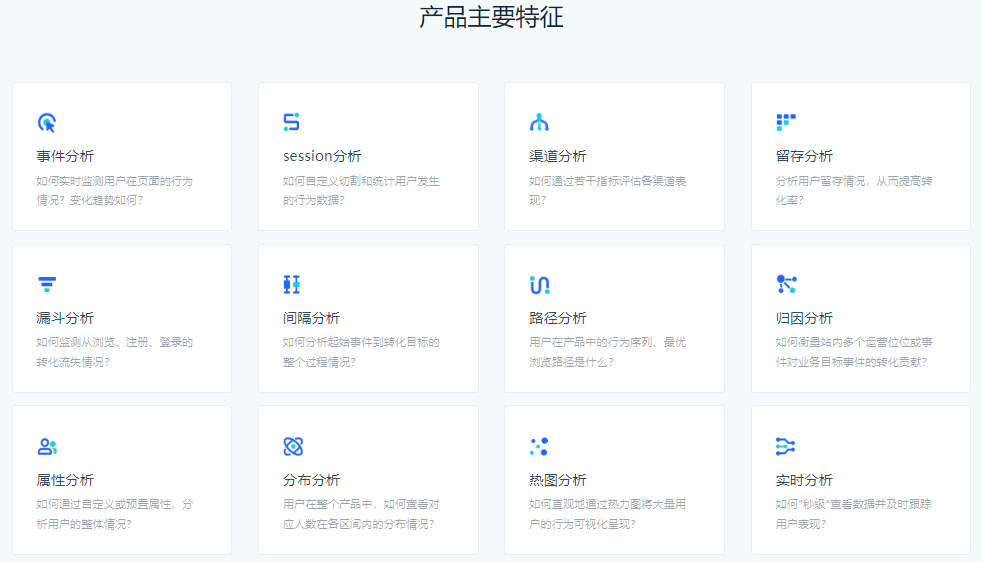
Supports real-time analysis, attribution, and insight from flexible, multi-perspective views through more than a dozen advanced analysis models, helping discover business growth points and improve ROI.
- Rich data visualization dashboards help generate your comprehensive data system.
- More than 10 rich data analysis models support flexible drill-down analysis to meet multi-scenario analysis needs.