Compliance Guidelines
Upgrade to the latest SDK
Make sure you have upgraded the Jiguang Operations Growth SDK (iOS) to the latest version that meets the new regulatory requirements.
SDK feature description
Integration notes: The Jiguang Operations Growth SDK provides core business features.
Core features: Provide developers with data analytics and user-profile capabilities, helping deliver content and services that match user preferences and reducing unnecessary interruptions.
| Category | Feature | Description | Personal information and processing purpose | Configuration |
| Core feature | Data analytics & user profile | Provides developers with professional analytics and user-profile capabilities, helping deliver content and services that match user preferences and reducing unnecessary interruptions. | Required personal information: Device identifier (IDFA): used to generate a de-identified unique device ID to ensure accurate device statistics; Device hardware information (model, screen resolution, manufacturer, product name, storage) and OS information (OS version, system name, system language): used to ensure cross-device compatibility, deliver statistics broken down by device, perform fine-grained behavior analytics, and build richer user profiles for precision marketing; Network information (network type, carrier name, IP address, DHCP, SIM card status, base station info): used to detect SDK-server connectivity, ensure stable and continuous service, and support user behavior analysis; Software list information (installed and running app lists): used for data statistics, analytics, and profile generation, helping you understand user interests, perform precision marketing, and avoid unnecessary disruptions. Optional personal information: Network information (SSID, BSSID, Wi-Fi status): used to detect connectivity and choose network paths to ensure stable service under different network states; Location-related information: used to provide geo-based statistics and user profiles, helping developers improve marketing effectiveness and reduce traffic costs. |
For optional information configuration see "Configuration examples of optional personal information" |
Configuration examples of optional personal information
| Type of personal information | Collection purpose | How to configure |
| Network information (SSID, BSSID, Wi-Fi status) | Used to detect connectivity and choose network paths to ensure stable service under different network states. | Enable/disable example: JOperateCollectControl *control = [[JOperateCollectControl alloc] init]; control.wifi = isWifiEnable; control.bssid = isBssidEnable; control.ssid = isSsidEnable; [JOPERATEService setCollectControl:control]; Parameters: isWifiEnable: whether to collect Wi-Fi status; true = collect, false = do not collect, default true isSsidEnable: whether to collect SSID; true = collect, false = do not collect, default true isBssidEnable: whether to collect BSSID; true = collect, false = do not collect, default true |
| Location-related information | Used to provide geo-based statistics. To improve marketing effectiveness and reduce traffic costs, you may use location to form a user profile and deliver differentiated marketing content. | Enable/disable example: JOperateCollectControl *control = [[JOperateCollectControl alloc] init]; control.gps = isGpsEnable; [JOPERATEService setCollectControl:control]; Parameters: isGpsEnable: whether to collect location; true = collect, false = do not collect, default true |
Collection frequency and precision
Integration notes: We collect personal information on a least-necessary basis. For frequency, the Jiguang Operations Growth SDK collects data only when the app invokes the relevant feature; the frequency is not configurable by the app developer, so no configurable frequency option or example is provided. For precision, this mainly concerns location features and is controlled by permissions. The Jiguang Operations Growth SDK lets the app decide whether to request precise or coarse location permission via optional permissions. To configure location permissions, refer to "SDK system permissions" below.
SDK system permissions
Integration notes: For system permissions optionally requested by the Jiguang Operations Growth SDK, see the table below for the relationship between each permission and feature and the timing of the request. Not granting a relevant permission affects the corresponding feature; configure them based on your business needs.
| iOS permission list | |||
|---|---|---|---|
| Permission | Optional? | Purpose | When requested |
| Network access | Required | Allows the SDK to access the network and report data; the most basic permission for SDK features. | Read when the feature is enabled (iOS prompts automatically for network business; no code request needed). |
| Location | Optional | Used for location-based user-profile analysis. | Read when the feature is enabled. |
| IDFA | Optional | Used by the IDFA package to retrieve a unique device identifier. | Read when the feature is enabled. |
SDK permission control
Optional permissions
          NSLocationWhenInUseUsageDescription // Access location
NSLocationAlwaysAndWhenInUseUsageDescription // Access location
NSUserTrackingUsageD // Collect IDFA permission
Privacy policy disclosure requirements and example
Integration notes: After integrating the Jiguang Operations Growth SDK into your app, normal operation collects necessary end-user information for behavior analysis and user-profile features. Based on actual integration, please disclose in your app's privacy policy the SDK name, company name, types and purposes of personal information processing, collection method, and a link to the SDK privacy policy. Recommendation: confirm the SDK version and modules you integrate, identify the data exchanged with the SDK from its privacy policy, and disclose this in your app's privacy policy as text or list.
Disclosure example (for reference; final wording per actual cooperation):
SDK name: Jiguang Operations Growth SDK
Third party: Shenzhen Hexun Huagu Information Technology Co., Ltd.
Cooperation purpose: Provide user behavior analytics and user-profile features for the app
Types of personal information processed:
Required personal information:
Device identifier (IDFA): used to generate a de-identified unique device ID for accurate device statistics;
Device hardware information (model, screen resolution, manufacturer, product name, storage) and OS information (OS version, system name, system language): used to ensure cross-device compatibility, deliver per-device statistics, perform fine-grained behavior analytics, and build richer user profiles for precision marketing;
Network information (network type, carrier name, IP address, DHCP, SIM card status, base station info): used to detect SDK-server connectivity, ensure service stability, and support user behavior analytics;
Software list information (installed and running app lists): used for data statistics, analytics, and profile generation, helping you understand user interests, perform precision marketing, and avoid unnecessary disruptions.
Optional personal information:
Network information (SSID, BSSID, Wi-Fi status): used to detect connectivity and choose network paths to ensure stable service under different network states;
Location-related information: used to provide geo-based statistics and user profiles to improve marketing effectiveness and reduce traffic costs.
Data handling: de-identification, encrypted transmission, and other security measures
Privacy policy: AURORA Jiguang Privacy Policy
Website: https://www.jiguang.cn
End-user consent guidance and example
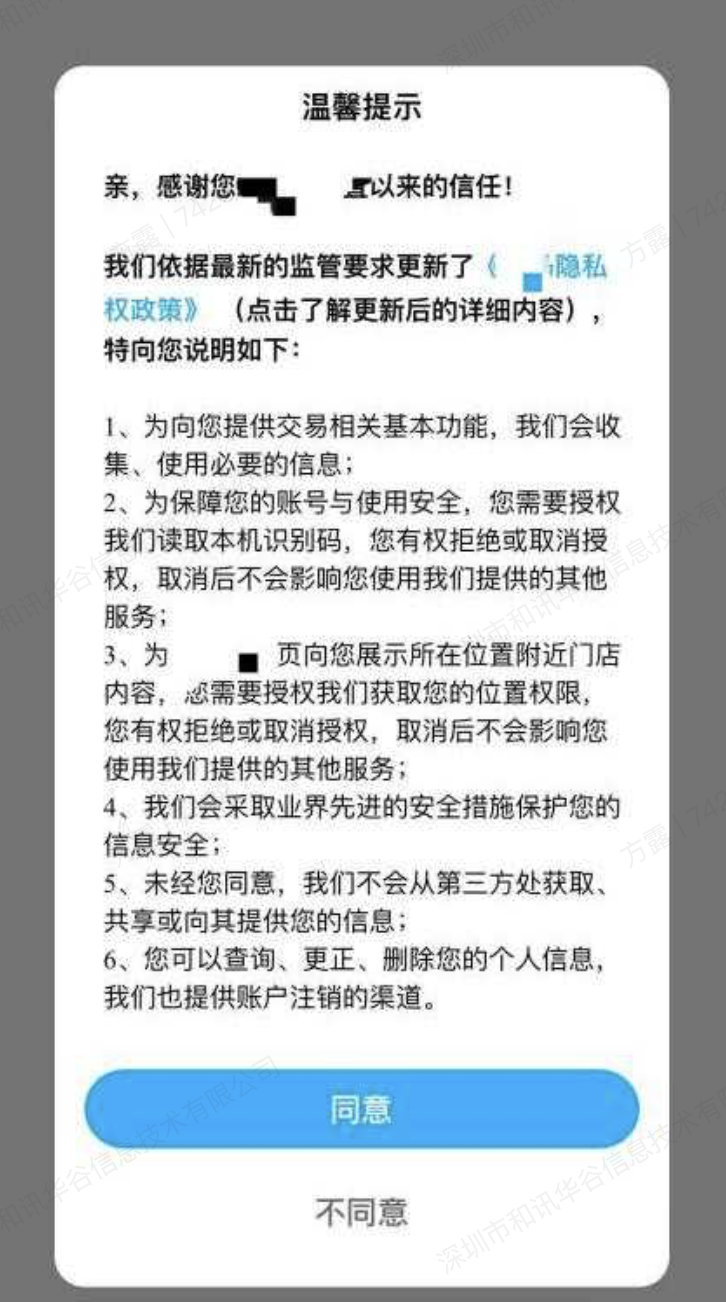
Integration notes: The app should show a privacy dialog on first launch, displaying a summary privacy policy and a link to the full policy, and explicitly prompt the end user to read and choose whether to consent; the dialog must provide both an "Agree" and a "Decline" button, and the end user must choose actively. If sensitive personal information is involved, separate authorized consent from the end user is required; you may implement this through a separate dialog, and in your privacy policy highlight the sensitive personal information items in bold or other visible style.
Special reminders:
- If data the app reports to the Jiguang Operations Growth platform involves end-user personal information and the law requires user authorization, you must perform the disclosure obligation to your end users and obtain their written consent.
- If the app uses the Jiguang Operations Growth SDK to process end-user personal information to form user profiles for automated decision-making, personalized recommendation, and other related features, you must obtain explicit valid consent from your end users, and provide options that are not based on their personal characteristics or a convenient way to opt out; you must not force end users to use this feature or provide related information.
- When using the Jiguang Operations Growth SDK, the app developer must ensure the product they develop or operate has a feature directly related to user profiling, and that feature must not be the only or required feature.
Privacy authorization dialog example:
Sensitive personal information authorization dialog example:
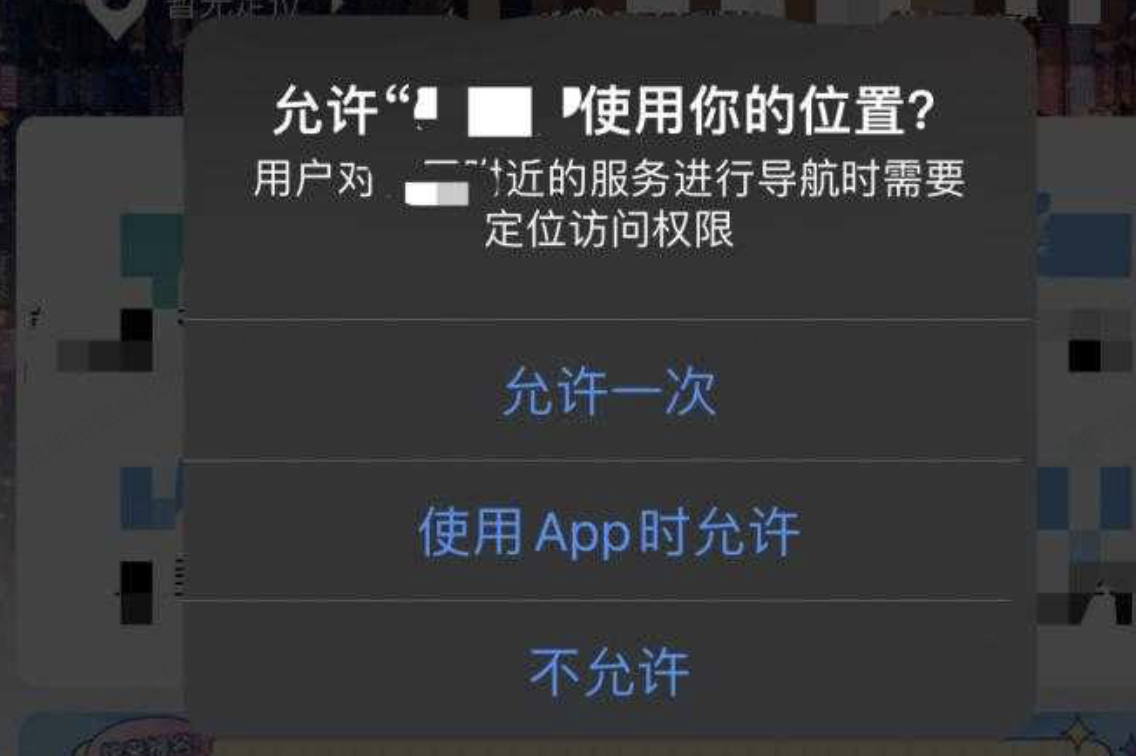
Sensitive personal information privacy disclosure example: "Precise location: used to provide geo-based statistics. To improve marketing effectiveness and reduce traffic costs, you may use location to form a user profile and deliver differentiated marketing content."
End-user rights
Integration notes: After the developer integrates the Jiguang Operations Growth SDK, normal operation collects necessary end-user information for behavior analytics, user profiling, or extended features. Per applicable laws, developers must provide paths or features for end users to exercise their personal information rights. If the Jiguang Operations Growth SDK is required to cooperate, please contact Jiguang in time; we will work with the developer to address end users' requests properly.
SDK initialization and feature-call timing
Integration notes: Always initialize the Jiguang Operations Growth SDK only after the user agrees to your app's privacy policy. Before user consent, do not dynamically request sensitive device permissions related to personal information; do not collect or report personal information without permission.
SDK initialization
API description
Make sure that on first app launch you call the initialization function [JOPERATEService initialize SDK] only after the user has read your Privacy Policy and granted authorization. Only then does the SDK actually collect and report device information. If the user has not read your Privacy Policy and granted authorization, or declines it, you must not call the initialization method. Do not call any SDK API before initialization.
SDK feature API calls
After initialization, calling operationStart (see the SDK API Guide) is considered enabling user behavior analytics and user profiling; from that point on we begin collecting and reporting the personal information corresponding to those features. If you decline to call it, the related Jiguang Operations Growth SDK features may be affected.
Privacy protection mechanisms
If you have any questions, comments, or suggestions about Jiguang Operations Growth SDK permissions, or need Jiguang's help to disable a permission collection, please contact us:
- Email: support@jiguang.cn
- Phone: 400-888-2376
- Address: Floor 31, Tower A, Building 12, Shenzhen Bay Technology Ecosystem Park, intersection of Baishi Road and Shahe West Road, Yuehai Subdistrict, Nanshan District, Shenzhen
You can also contact us anytime via the online customer service on the Jiguang website. We will provide consulting and support promptly to ensure privacy protection mechanisms are implemented.